
Full Responsibility for the Future Through Zero Waste Practices
In today’s world, one of the most important components of sustainable development is the effective management of natural resources and the control of waste. In this context, the zero waste approach has evolved into not only an environmental policy but also a holistic management model that supports economic, social, and corporate sustainability. With the Zero Waste Regulation published in the Official Gazette of Türkiye on July 12, 2019, waste management processes were placed within a systematic framework, and the responsibilities of industrial organizations in this field became clearly defined.
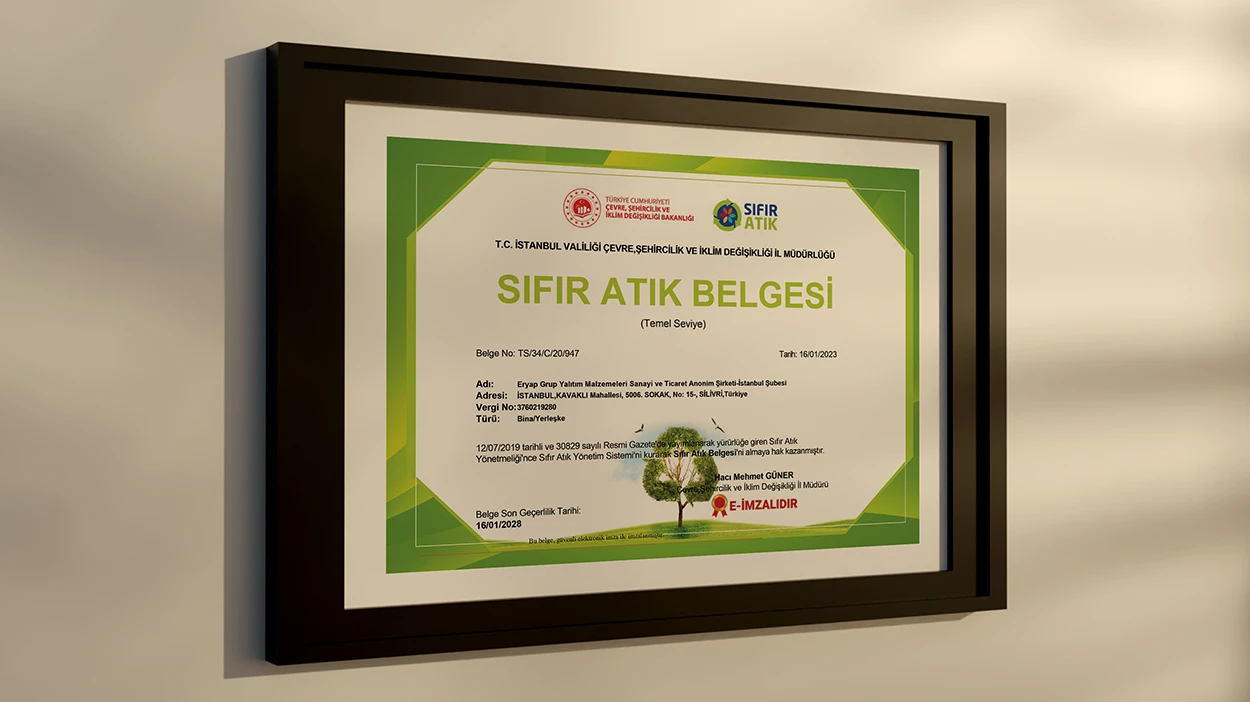
Following the enactment of the regulation, Bonus Yalıtım integrated zero waste principles into its corporate structure and carried out comprehensive initiatives in a short period of time. Through the zero waste management system established in its factories, the separation of waste at source and the promotion of recycling — both in administrative and production processes — have been made a corporate priority. Within this framework, infrastructure was developed to ensure separate waste collection in non-production units such as offices, cafeterias, and common areas; recyclable waste collected through these practices has been directed to licensed recycling facilities, thereby contributing to the national economy.
In order to ensure that waste management practices are not limited solely to operational processes, regular environmental training programs are also provided to employees. In this way, the success of the zero waste system is strengthened through individual awareness and participation, while increasing employees’ environmental responsibility awareness has become an integral part of the corporate culture. Furthermore, the transfer of vegetable waste oils generated in cafeterias, as well as electronic waste and batteries, to licensed recovery facilities stands out not only as compliance with environmental obligations but also as a reflection of the company’s corporate sustainability vision.
Industrial facilities are among the areas where waste generation is highest due to intensive production activities. For this reason, the zero waste approach emerges not only as an environmental necessity but also as a strategic management tool within production facilities. Implementing zero waste practices in factories increases raw material efficiency, contributes to energy savings, and reduces waste disposal costs. Through recycling and reuse, the amount of energy required for production decreases, the carbon footprint is reduced, and the consumption of natural resources is minimized. These practices also strengthen corporate reputation by ensuring full compliance with environmental legislation and provide advantages in national and international certification processes. Accordingly, reintegrating waste into the economy contributes to the circular economy while supporting sustainable industrial and production models.
In conclusion, Bonus Yalıtım’s zero waste policies extend beyond the protection of environmental and human health, also contributing to the development of the circular economy. Zero waste practices improve the company’s environmental performance while supporting the efficient use of raw materials, energy, and natural resources. Within this framework, Bonus Yalıtım considers the zero waste approach not merely as a legal obligation, but as a corporate responsibility and a strategic instrument for achieving sustainable development goals.