
TECHNICAL ARTICLES
Water ingress into a structure often causes no visible issues during its initial stages. However, it results in slow, cumulative deterioration of building materials. Water reaching the structural reinforcement degrades the performance of the load-bearing system through freeze-thaw cycles, chemical reactions, and corrosion. In particular, the rusting of steel reinforcement inside reinforced concrete elements over time is one of the primary factors reducing structural resistance. Even if this loss of strength goes unnoticed during daily use, it can trigger severe structural risks during minor ground movements and, especially, during earthquakes. Cracks, fractures, and load-bearing element vulnerabilities directly threaten both life and property safety.
Incomplete, incorrect, or inadequate waterproofing causes significant issues not only for the load-bearing system, but also for living comfort. The negative effects of moisture and water on structural components lead to organic growth such as mold, fungi, and discoloration on walls. Natural materials used on interior surfaces, such as timber, deteriorate over time; plaster may blister and flake off, and reinforcement in columns and shear walls can corrode. Consequently, both the aesthetic appearance of the building suffers and indoor air quality declines. Musty odors caused by dampness, unhealthy living conditions, and reduced user comfort are natural consequences of this process. Waterproofing is therefore not merely a technical application, but a prerequisite for creating healthy, comfortable, and sustainable living spaces.
The economic significance of waterproofing is equally substantial. As property values continue to rise, buildings are expected to remain long-lasting without losing performance over time. When adequate precautions against the harmful effects of water are neglected, building lifespans shorten, and maintenance and repair costs increase significantly. Moreover, such damage can rarely be resolved through superficial interventions; delayed measures inevitably lead to far costlier structural repairs. Although the budget allocated to waterproofing during construction represents a relatively minor portion of overall building costs, the financial losses resulting from its neglect are exponentially higher. Waterproofing should thus be viewed not as an added expense, but as a strategic investment that protects the structure, reduces maintenance costs, and safeguards asset value.
In earthquake-prone regions such as Turkey, waterproofing carries an even more critical meaning. With a major portion of the country situated on active fault zones, load-bearing systems must remain robust over many decades. Numerous structures damaged or collapsed during past earthquakes exhibited significant corrosion driven by moisture and water ingress. This clearly demonstrates that waterproofing is not merely a system to keep water out, but a vital element preserving structural integrity. While visually prominent finishing materials often receive greater priority, waterproofing—which directly impacts building safety—does not always receive the attention it deserves. Yet when it comes to structural safety, the benefits offered by proper waterproofing far outweigh its initial cost.
Damp-proofing and waterproofing in buildings are applied to prevent water—regardless of its origin, direction, or intensity—from causing damage to any part of the structure. Foundations, basement retaining walls, roofs, terraces, wet areas, and other ground-contact zones represent the most critical application points. Waterproofing applied at foundations and basement walls protects the structure not only against water, but also against aggressive chemicals present in the soil that can reach building elements via groundwater. In addition, structural elements are subjected to various physical forces beyond mere groundwater or surface runoff; the kinetic energy of raindrops, capillary suction, gravity, air pressure differentials, and hydrostatic pressure can all drive water into the building matrix. Waterproofing must therefore be designed and executed with all these physical phenomena in mind.
Elements in direct contact with the soil that bear the entire weight of the structure require the highest level of protection against water- and moisture-induced corrosion. In practice, however, decisions regarding foundation and basement waterproofing are frequently based on the intended use of those spaces. Waterproofing is often deemed unnecessary if a basement is designated as a storage unit, shelter, or unused area, but considered essential if designated as a living space. Yet even when basement or ground floors are unoccupied, the reinforced concrete load-bearing elements located within them remain the most critical parts of the entire building. The elements subjected to the highest stresses during earthquakes and ground settlements are situated precisely in these lower zones. The rusting of reinforcement and the resulting loss of load-bearing capacity cannot be reversed through superficial remedies applied after the fact. Foundation and basement waterproofing must therefore be considered mandatory for structural protection, regardless of the occupancy scenario.
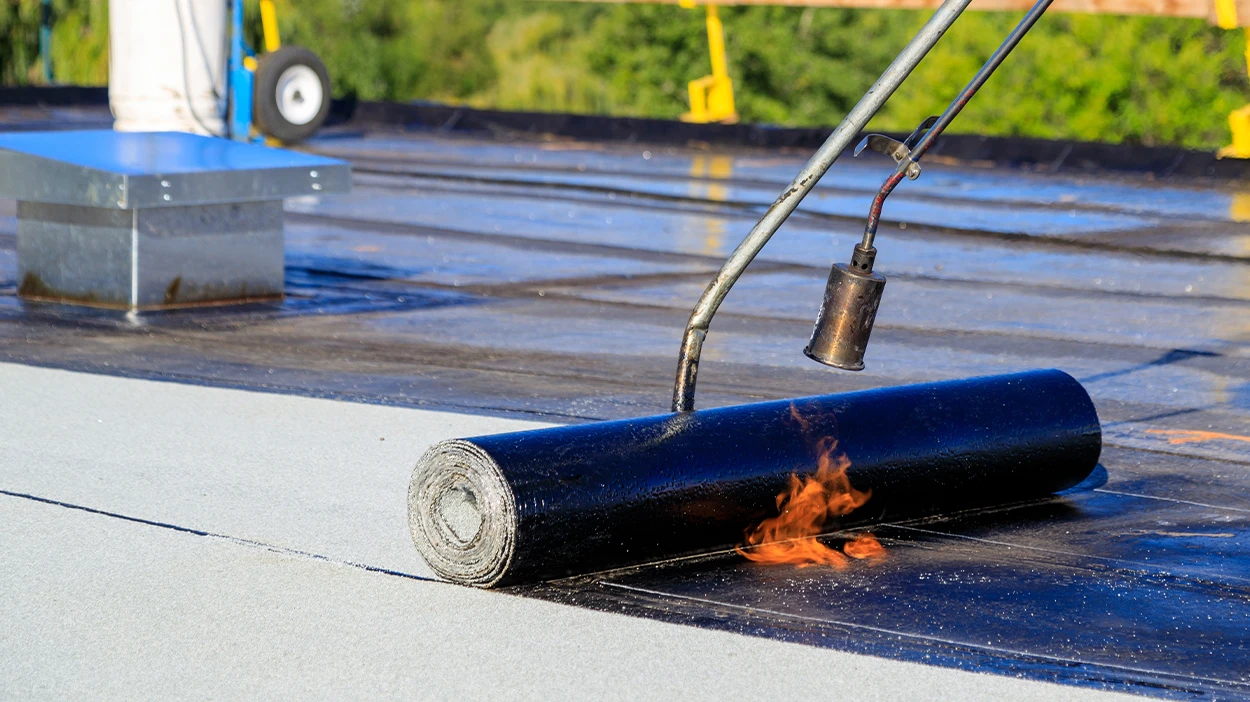
Adhering to proper detailing during foundation waterproofing is paramount. Applications using bituminous membranes should generally be performed at ambient temperatures of +5°C and above, on dry substrates, and during dry weather conditions. The application surfaces must be smooth, clean, and free of defects. Oil, dirt, diesel fuel, and any other substances that could compromise adhesion must be thoroughly removed. At vertical and horizontal intersections, 45° angled chamfers (fillets) of adequate dimensions must be formed to allow membranes to transition smoothly, and reinforcing strip elements should be used at internal and external corners. Reinforced concrete surfaces must be prepared with suitable primers before insulating membranes are installed using the designated bonding method. Staggering joint overlaps correctly, maintaining standard lap distances, and positioning the second layer of membrane so that it centers over the joints of the first layer are critical details for overall system performance.
For liquid-applied waterproofing materials, surface preparation and application conditions are just as critical as the material itself. These products must be applied to sound, mineral-based substrates such as concrete, lime-free plaster, or screed. Layers exhibiting weak adhesion, oil absorption, or compromised surface integrity must be stripped away prior to application. Honeycombing, voids, cracks, and cold joints must be repaired with suitable repair mortars; internal corners must be chamfered, and external corners rounded off. While cementitious products require proper pre-dampening of the substrate, bitumen-based products require a completely dry surface. Bituminous, acrylic, and polyurethane-based systems also require appropriate priming before application. Mixing ratios must strictly follow manufacturer recommendations to achieve a homogeneous consistency, and application must occur within the specified temperature range. Materials are typically applied in 1 to 3 coats; curing times between coats, application direction, and consumption rates must comply with manufacturer datasheets. Following application, the surface must be protected against water, extreme heat, wind, frost, mechanical impact, and UV exposure.
It is equally important to emphasize a key technical distinction: XPS and EPS boards are not waterproofing materials. These products serve primarily as thermal insulation and, in certain system assemblies, function as protective layers for the underlying waterproofing membrane. Thermal insulation and waterproofing must never be confused as being interchangeable. Waterproofing is an independent building protection system that must be planned separately and executed with its own dedicated detailing.
In conclusion, waterproofing is a vital practice that directly governs both the immediate integrity and future performance of a structure. A well-designed waterproofing system executed with correct materials protects the load-bearing framework, extends building service life, lowers maintenance and repair expenses, and supports indoor environmental quality and occupant health. Waterproofing must never be treated as a secondary or optional detail, but as an indispensable necessity for structural safety, durability, and sustainability.
The Importance of Waterproofing in Structural Health and Application Techniques
Waterproofing is one of the most fundamental building protection systems required to ensure that structures remain durable, safe, and healthy throughout their lifespan. Over their service lives, buildings are exposed not only to external weather conditions, but also to ground moisture, groundwater, and indoor water exposure. Rain, snow, dew, groundwater, utility water, and leaks originating from wet areas such as kitchens, bathrooms, and toilets can penetrate structural elements over time, causing severe damage. Furthermore, both pressurized and non-pressurized groundwater present in the soil beneath a building pose significant risks.Water ingress into a structure often causes no visible issues during its initial stages. However, it results in slow, cumulative deterioration of building materials. Water reaching the structural reinforcement degrades the performance of the load-bearing system through freeze-thaw cycles, chemical reactions, and corrosion. In particular, the rusting of steel reinforcement inside reinforced concrete elements over time is one of the primary factors reducing structural resistance. Even if this loss of strength goes unnoticed during daily use, it can trigger severe structural risks during minor ground movements and, especially, during earthquakes. Cracks, fractures, and load-bearing element vulnerabilities directly threaten both life and property safety.
Incomplete, incorrect, or inadequate waterproofing causes significant issues not only for the load-bearing system, but also for living comfort. The negative effects of moisture and water on structural components lead to organic growth such as mold, fungi, and discoloration on walls. Natural materials used on interior surfaces, such as timber, deteriorate over time; plaster may blister and flake off, and reinforcement in columns and shear walls can corrode. Consequently, both the aesthetic appearance of the building suffers and indoor air quality declines. Musty odors caused by dampness, unhealthy living conditions, and reduced user comfort are natural consequences of this process. Waterproofing is therefore not merely a technical application, but a prerequisite for creating healthy, comfortable, and sustainable living spaces.
The economic significance of waterproofing is equally substantial. As property values continue to rise, buildings are expected to remain long-lasting without losing performance over time. When adequate precautions against the harmful effects of water are neglected, building lifespans shorten, and maintenance and repair costs increase significantly. Moreover, such damage can rarely be resolved through superficial interventions; delayed measures inevitably lead to far costlier structural repairs. Although the budget allocated to waterproofing during construction represents a relatively minor portion of overall building costs, the financial losses resulting from its neglect are exponentially higher. Waterproofing should thus be viewed not as an added expense, but as a strategic investment that protects the structure, reduces maintenance costs, and safeguards asset value.
In earthquake-prone regions such as Turkey, waterproofing carries an even more critical meaning. With a major portion of the country situated on active fault zones, load-bearing systems must remain robust over many decades. Numerous structures damaged or collapsed during past earthquakes exhibited significant corrosion driven by moisture and water ingress. This clearly demonstrates that waterproofing is not merely a system to keep water out, but a vital element preserving structural integrity. While visually prominent finishing materials often receive greater priority, waterproofing—which directly impacts building safety—does not always receive the attention it deserves. Yet when it comes to structural safety, the benefits offered by proper waterproofing far outweigh its initial cost.
Damp-proofing and waterproofing in buildings are applied to prevent water—regardless of its origin, direction, or intensity—from causing damage to any part of the structure. Foundations, basement retaining walls, roofs, terraces, wet areas, and other ground-contact zones represent the most critical application points. Waterproofing applied at foundations and basement walls protects the structure not only against water, but also against aggressive chemicals present in the soil that can reach building elements via groundwater. In addition, structural elements are subjected to various physical forces beyond mere groundwater or surface runoff; the kinetic energy of raindrops, capillary suction, gravity, air pressure differentials, and hydrostatic pressure can all drive water into the building matrix. Waterproofing must therefore be designed and executed with all these physical phenomena in mind.
Elements in direct contact with the soil that bear the entire weight of the structure require the highest level of protection against water- and moisture-induced corrosion. In practice, however, decisions regarding foundation and basement waterproofing are frequently based on the intended use of those spaces. Waterproofing is often deemed unnecessary if a basement is designated as a storage unit, shelter, or unused area, but considered essential if designated as a living space. Yet even when basement or ground floors are unoccupied, the reinforced concrete load-bearing elements located within them remain the most critical parts of the entire building. The elements subjected to the highest stresses during earthquakes and ground settlements are situated precisely in these lower zones. The rusting of reinforcement and the resulting loss of load-bearing capacity cannot be reversed through superficial remedies applied after the fact. Foundation and basement waterproofing must therefore be considered mandatory for structural protection, regardless of the occupancy scenario.
Adhering to proper detailing during foundation waterproofing is paramount. Applications using bituminous membranes should generally be performed at ambient temperatures of +5°C and above, on dry substrates, and during dry weather conditions. The application surfaces must be smooth, clean, and free of defects. Oil, dirt, diesel fuel, and any other substances that could compromise adhesion must be thoroughly removed. At vertical and horizontal intersections, 45° angled chamfers (fillets) of adequate dimensions must be formed to allow membranes to transition smoothly, and reinforcing strip elements should be used at internal and external corners. Reinforced concrete surfaces must be prepared with suitable primers before insulating membranes are installed using the designated bonding method. Staggering joint overlaps correctly, maintaining standard lap distances, and positioning the second layer of membrane so that it centers over the joints of the first layer are critical details for overall system performance.
For liquid-applied waterproofing materials, surface preparation and application conditions are just as critical as the material itself. These products must be applied to sound, mineral-based substrates such as concrete, lime-free plaster, or screed. Layers exhibiting weak adhesion, oil absorption, or compromised surface integrity must be stripped away prior to application. Honeycombing, voids, cracks, and cold joints must be repaired with suitable repair mortars; internal corners must be chamfered, and external corners rounded off. While cementitious products require proper pre-dampening of the substrate, bitumen-based products require a completely dry surface. Bituminous, acrylic, and polyurethane-based systems also require appropriate priming before application. Mixing ratios must strictly follow manufacturer recommendations to achieve a homogeneous consistency, and application must occur within the specified temperature range. Materials are typically applied in 1 to 3 coats; curing times between coats, application direction, and consumption rates must comply with manufacturer datasheets. Following application, the surface must be protected against water, extreme heat, wind, frost, mechanical impact, and UV exposure.
It is equally important to emphasize a key technical distinction: XPS and EPS boards are not waterproofing materials. These products serve primarily as thermal insulation and, in certain system assemblies, function as protective layers for the underlying waterproofing membrane. Thermal insulation and waterproofing must never be confused as being interchangeable. Waterproofing is an independent building protection system that must be planned separately and executed with its own dedicated detailing.
In conclusion, waterproofing is a vital practice that directly governs both the immediate integrity and future performance of a structure. A well-designed waterproofing system executed with correct materials protects the load-bearing framework, extends building service life, lowers maintenance and repair expenses, and supports indoor environmental quality and occupant health. Waterproofing must never be treated as a secondary or optional detail, but as an indispensable necessity for structural safety, durability, and sustainability.