
NEWSLETTERS
Cities Are Changing the Character of Rainfall: Why Foundation Waterproofing Has Become Strategic in a Changing Climate
For many years, waterproofing was primarily regarded as a technical application designed to prevent water from entering a building. Today, however, the issue goes far beyond damp basements or blistering on wall surfaces. The way cities are expanding, the increase in impermeable surfaces, the growing use of underground spaces, and sudden heavy rainfall associated with climate change are making waterproofing one of the most critical aspects of both building safety and urban resilience.
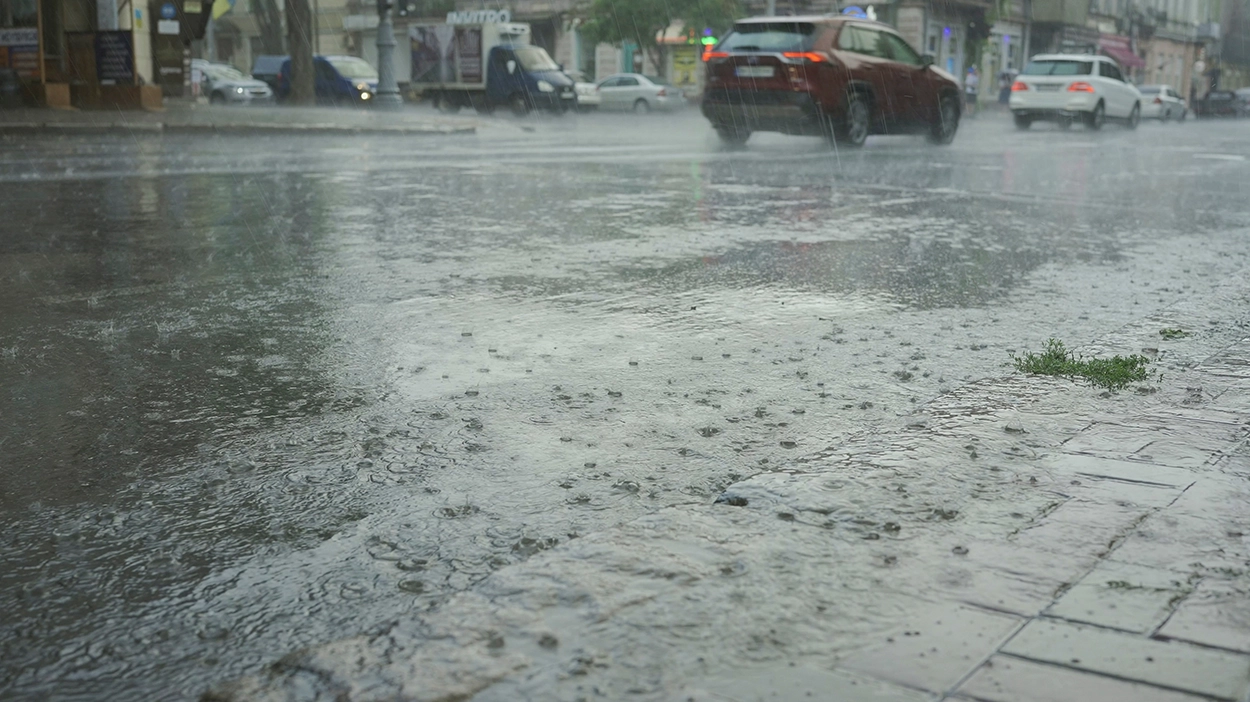
Under changing climate conditions, how rain falls is becoming more important than the total amount of annual precipitation. Rainfall that occurs over a short period, within a limited area, and at high intensity can create a chain of pressure on streets, infrastructure, parking areas, basements, foundations, and retaining walls. For this reason, urban water management should no longer be considered solely in terms of stormwater drainage systems, sewer capacity, or river improvement projects. Every surface of a building that comes into contact with the ground should be treated as part of a protective system designed to withstand this new water regime.
A study published in Earth’s Future in 2024, examining eight cities in Europe and the United States, found that summer storms can occur more frequently, more intensely, and in a more concentrated manner over urban areas than over their surrounding rural regions. The study indicates that this concentration is more pronounced in larger cities, with rainfall intensity in some major urban areas increasing by approximately 5.2% to 11% compared with surrounding areas, while precipitation can become up to 15% more spatially concentrated. In other words, under certain conditions, the city is no longer simply a surface that receives rainfall; it becomes an active environment capable of influencing the behavior of rainfall itself.
This finding represents an important turning point for the construction industry. In urban environments, risk is determined not only by the amount of water but also by the surface it contacts, the duration of that contact, and the pressure it creates. Dense development and extensive asphalt and concrete surfaces reduce the soil’s ability to absorb water, while deep foundations, underground parking structures, and single-sided retaining wall applications increase the surface area of buildings exposed to water. This highlights once again the importance of the decisions made regarding foundation waterproofing.
According to data from the Turkish State Meteorological Service, 2024 was Türkiye’s hottest year in the last 53 years, with an average temperature of 15.6°C. During the same year, nationwide precipitation was 6.3% below normal levels. At first glance, lower annual rainfall may appear to suggest a reduced water-related risk. However, under the emerging climate pattern, the key issue is that even while total precipitation decreases, sudden and localized rainfall events can place greater loads on buildings. Soil that hardens during prolonged dry periods may absorb water less effectively during short but intense rainfall events. Water then tends to follow the easiest path, penetrating the building envelope through vulnerable details.
Global assessments also support this approach. The IPCC’s 2022 report notes that climate-related extreme events, including heavy precipitation, are already having widespread impacts on settlements and infrastructure, and that design and infrastructure decisions in cities are critical to improving resilience against climate risks. In Türkiye, the Regulation on Waterproofing in Buildings, which sets out waterproofing principles for foundations, floors, basement walls, roofs, balconies, and wet areas, also demonstrates that waterproofing is not merely an optional construction practice but an essential discipline for long-term building health.
For this reason, waterproofing of foundations and retaining walls is not simply a matter of comfort; it is directly related to building durability and safety. Exposure to water and moisture can lead to reinforcement corrosion, loss of strength in reinforced concrete elements, mold, dampness, indoor usability problems, and increased maintenance and repair costs. Furthermore, correcting mistakes after construction is often significantly more difficult and costly than implementing the correct solution during the initial construction phase and, in some cases, may not even be fully possible.
Within this new approach to water-related risks, Bonus Yalıtım Proof Membrane stands out as a strong solution for foundations, deep foundations, and single-sided retaining wall waterproofing applications. Its elastomeric SBS-modified structure, polyester felt reinforcement, and ability to fully bond to fresh concrete through concrete pressure and the heat generated during hydration help prevent water from migrating between the foundation concrete and the waterproofing layer. The fact that it does not require protective concrete, can be applied in a single layer, and eliminates the need for primer and geotextile protection layers also provides significant advantages in terms of construction time and application efficiency.
The key issue is not only keeping water away from the structure, but also preventing it from finding a path within the building envelope. When the waterproofing layer fully bonds with the foundation concrete, the risk of water spreading over a wider area from a localized point of damage is reduced, resulting in a more controlled and traceable protection system. Particularly in dense urban environments, adjacent building plots, and projects requiring deep excavation, this approach becomes increasingly valuable in terms of both installation reliability and long-term performance.
In the changing climate, a safe building depends not only on correctly designed structural systems but also on providing continuous protection against water. As cities expand, the behavior of rainfall within urban environments is also changing. Adapting to this transformation requires us to see waterproofing not as an invisible construction detail, but as a fundamental resilience strategy that begins at ground level.